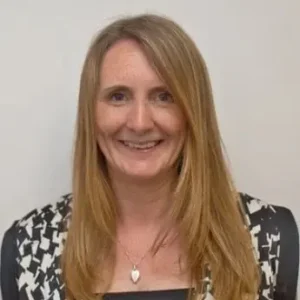
Speaker

Lesley Millar
About The Speaker

Lesley is the founder and owner of OneStudy Training Limited, bringing over 25 years of industry expertise and a distinguished portfolio of professional qualifications, including Chartered Governance Professional, Felow of the Chartered Association of Certified Accountants (FCCA), and Six Sigma Black Belt. Her career spans accounting practice, internal audit, and tax, with a highlight being her tenure as Head of Client Accounting at one of Switzerland’s leading banking institutions.

Drawing on this broad cross-sector experience, Lesley established OneStudy Training , a venture that has thrived for 25 years, driven by strong student outcomes and exceptional pass rates.

Complementing her industry credentials are formal qualifications in teaching and learning, ensuring that OneStudy’s programs are both technicaly rigorous and pedagogicaly sound. Lesley is dedicated to delivering a personalised, supportive learning experience that empowers students at every stage of their journey.

Upcoming Event

Interpreting Trust Accounts

Course Details
Course Overview

This course provides a practical and accessible introduction to trust accounts and trust accounting, designed for professionals who need to understand, interpret, and explain trust financial information with confidence.

Learners wil gain a clear understanding of how trust accounts work, the key legal and fiduciary responsibilities involved, and how trust accounting differs from standard financial accounting. The course focuses on what actualy matters in practice : from distinguishing income and capital, to reading trust financial statements, processing common transactions, and communicating trust account information clearly to trustees and beneficiaries.

By the end of the course, learners wil be able to navigate trust accounts confidently, identify key risks and obligations, and explain trust financial information in a clear, structured, and professional way

Learning Objectives

By the end of the workshop, participants wil be able to:

  1. Explain the purpose and structure of trust accounts, including different types of trusts and why accurate trust accounting is critical.
  2. Identify the key stakeholders in a trust arrangement and understand their legal, regulatory, and fiduciary responsibilities.
  3. Apply core trust accounting principles, including the distinction between income and capital, and the treatment of accruals, distributions, and reserves.
  4. Read and interpret trust financial statements, including balance sheets, income and expenditure accounts, capital and beneficiary accounts, and supporting notes.
  5. Process and understand common trust accounting transactions, including contributions, distributions, investment income, gains and losses, fees, and taxes.
  6. Prepare and review basic trust accounting entries and reconciliations with accuracy and confidence.
  7. Communicate trust account information clearly and professionaly, responding to common questions from trustees and beneficiaries and explaining complex information in plain language.
Course Details
1. Introduction to Trust Accounts
  • What is a trust account, types of trust and why it matters
  • Key stakeholders: trustees, beneficiaries, administrators, regulators
  • Legal and fiduciary responsibilities
2. Trust Accounting Fundamentals
  • Income vs capital – key distinctions
  • Common trust account formats
  • Accounting principles applied to trusts
  • Accruals, distributions, and reserves
3. Reading and Interpreting Trust Financial Statements
  • Balance sheet/statement of assets and liabilities
  • Income and expenditure account
  • Capital accounts and beneficiary accounts
  • Notes to the accounts — what realy matters
  • Key ratios and metrics for trust accounts
4. Transactions & Common Accounting Entries
  • Contributions, distributions, and expenses
  • Investment income and realised/unrealised gains
  • Fees, taxes, and expenses
  • Journal entries and reconciliations
5. Communicating Trust Account Information
  • Q&A and guided walkthroughs
  • Explaining accounts to trustees and beneficiaries
  • Common questions and how to answer them clearly
  • Presenting trust information confidently